

Szabolcs Bozó
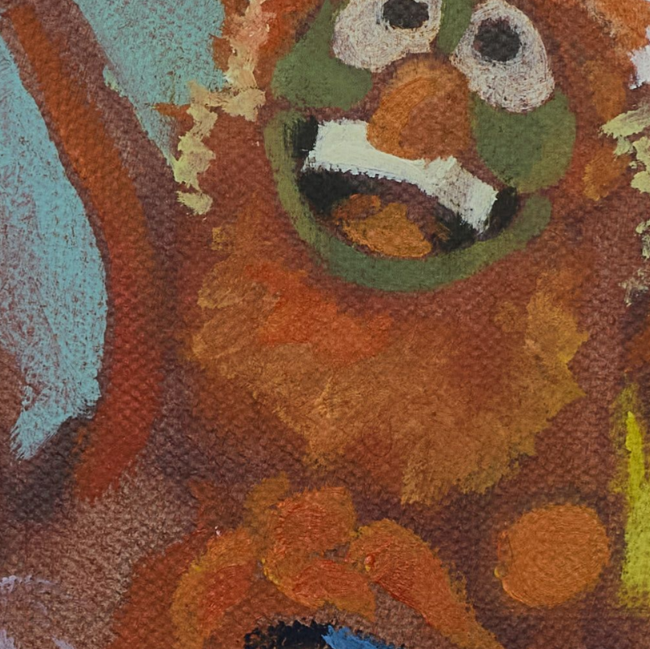
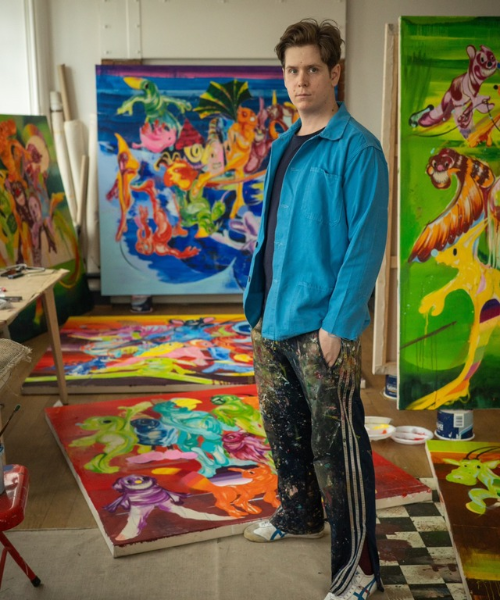
To delve into the fantastical world of Szabolcs Bozó, born in 1992 in Pécs, Hungary and known simply as ‘Szabi’, is to encounter a cacophony of wild cartoon-ish animal figures, extravagantly colourful and full of an apparently untrammelled sense of mischief and joy. But these are not the familiar, Western icons of animation. No Mickey Mouse or Bugs Bunny here. His brushwork belongs to a post-war gesturalism, their shoes to 18th century cobblers’ creations. Something is not quite as it seems.
In truth these creatures are born in part out of the rich history of Hungarian animation, which has, from its auspicious beginnings in the 1910s, drawn on Hungarian folklore and mythology for its inspiration, with morality tales and the grotesque being the dominant aesthetic in those early days, later giving way to a fertile if constrained period in the 1950s when the industry was nationalized by the Communist state, eventually moving toward a focus on anxiety and claustrophobia in the 1970s and finally exploding into its heyday of iconography, clearly still heavily influenced by the preceding years, in the 1980s. It is this very specific Hungarian cultural legacy that informs Szabi’s lively cast of lovable characters.
This is the aesthetic formation of Szabi’s paintings, absorbed by osmosis if not intent, along with the hand-puppets, first-generation computer games, comics and fables still ever-present in the Hungarian television programs of his childhood, such as the well-known ‘Little Mole’ or the lesser-known ‘Süsü the Dragon’ which share some of the trippy and home-made qualities of the famous BBC children’s series of the 1960s, ‘The Magic Roundabout’ but which are informed by a rather more sinister history. The artist doesn’t simply replicate these figures of a uniquely Hungarian ‘pop’ culture, he extracts the melancholic, retro character of his animals and transforms them anew via an unabashed celebration of painting.